


Soilless Strawberry and Blueberry Irrigation Systems: Fertigation, Automation and Project Engineering
In soilless strawberry and blueberry greenhouses, irrigation is the infrastructure that most directly decides yield and fruit quality. Without the buffering effect of soil, the root zone depends on getting water, nutrients and pH right every day, and often at every irrigation pulse. This article explains the design of a soilless strawberry irrigation system and a potted blueberry irrigation system, EC and pH-controlled fertigation and automation in enough technical detail to support an investment decision. All examples come from projects that Perge Engineering has built in Turkey and abroad and published on its reference pages.
Short answer: Success in soilless strawberry and blueberry irrigation depends on four things: pressure-compensated drip design that gives every plant the same water, EC and pH set for the crop, measured drainage, and automation that starts irrigation from light or substrate moisture. Strawberries need short, frequent pulses; blueberries need an acidic root zone (about pH 4.5–5.5) and low salinity.
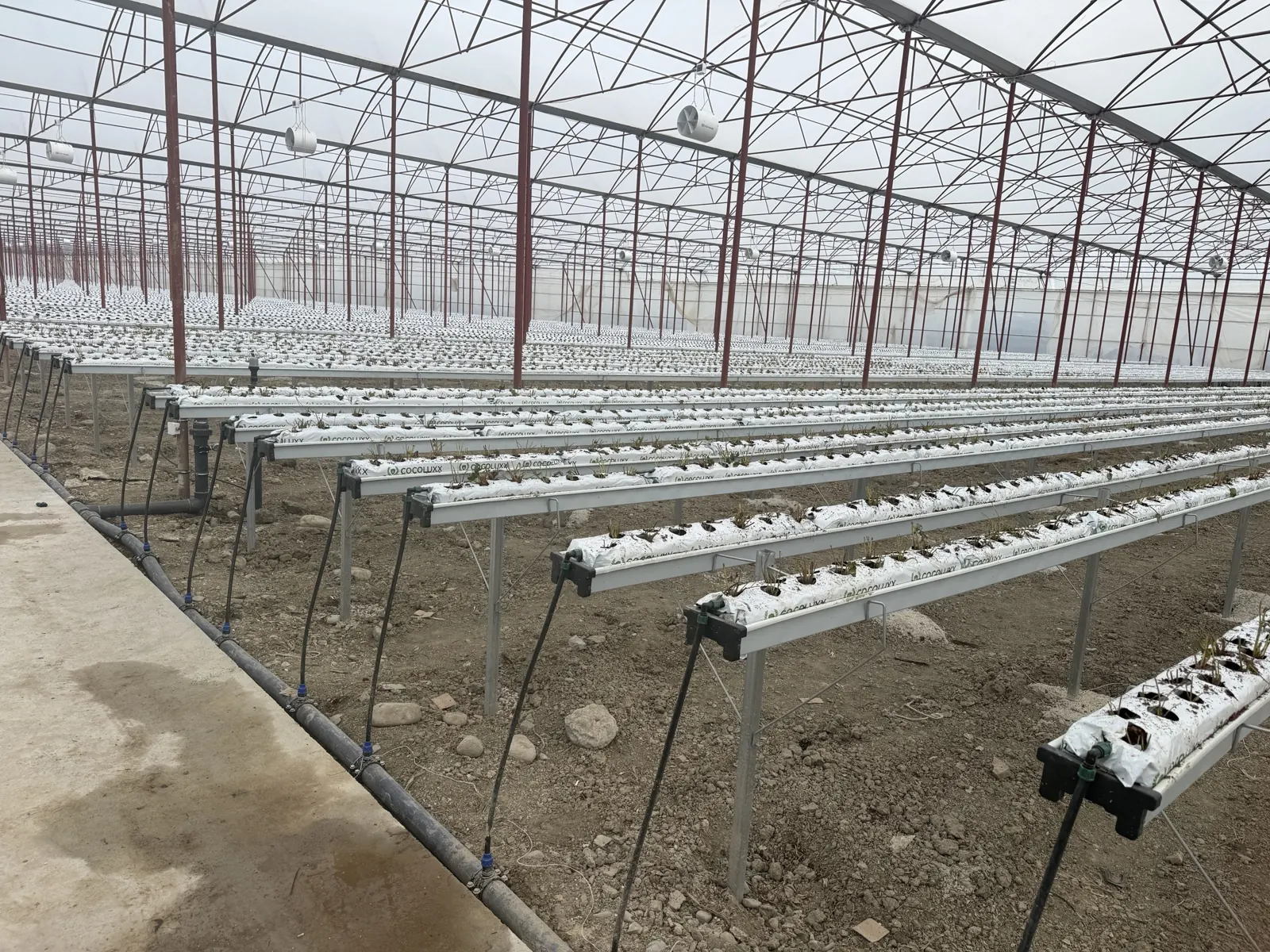
Why is irrigation decisive in soilless strawberry and blueberry production?
Substrates (cocopeat, perlite, peat mixes) hold far less water and nutrients than soil, so mistakes reach the plant within hours. Four issues matter most in commercial production:
- Irrigation uniformity: the first and the last plant in the greenhouse must receive the same water. This comes from pressure-compensated emitters, correct pipe sizing and a sound valve and shift plan.
- Root zone management: the substrate should neither stay waterlogged nor dry out. Roots need oxygen as much as water.
- EC and pH control: if the salt concentration (EC) and acidity (pH) of the nutrient solution are not set for the crop, nutrient uptake suffers; in blueberries, high pH leads to iron deficiency symptoms.
- Automation: many daily pulses across dozens of decares cannot be managed by hand. Controllers, sensors and dosing pumps do this consistently.
How is a soilless strawberry irrigation system designed?
Growing gutters and substrate systems
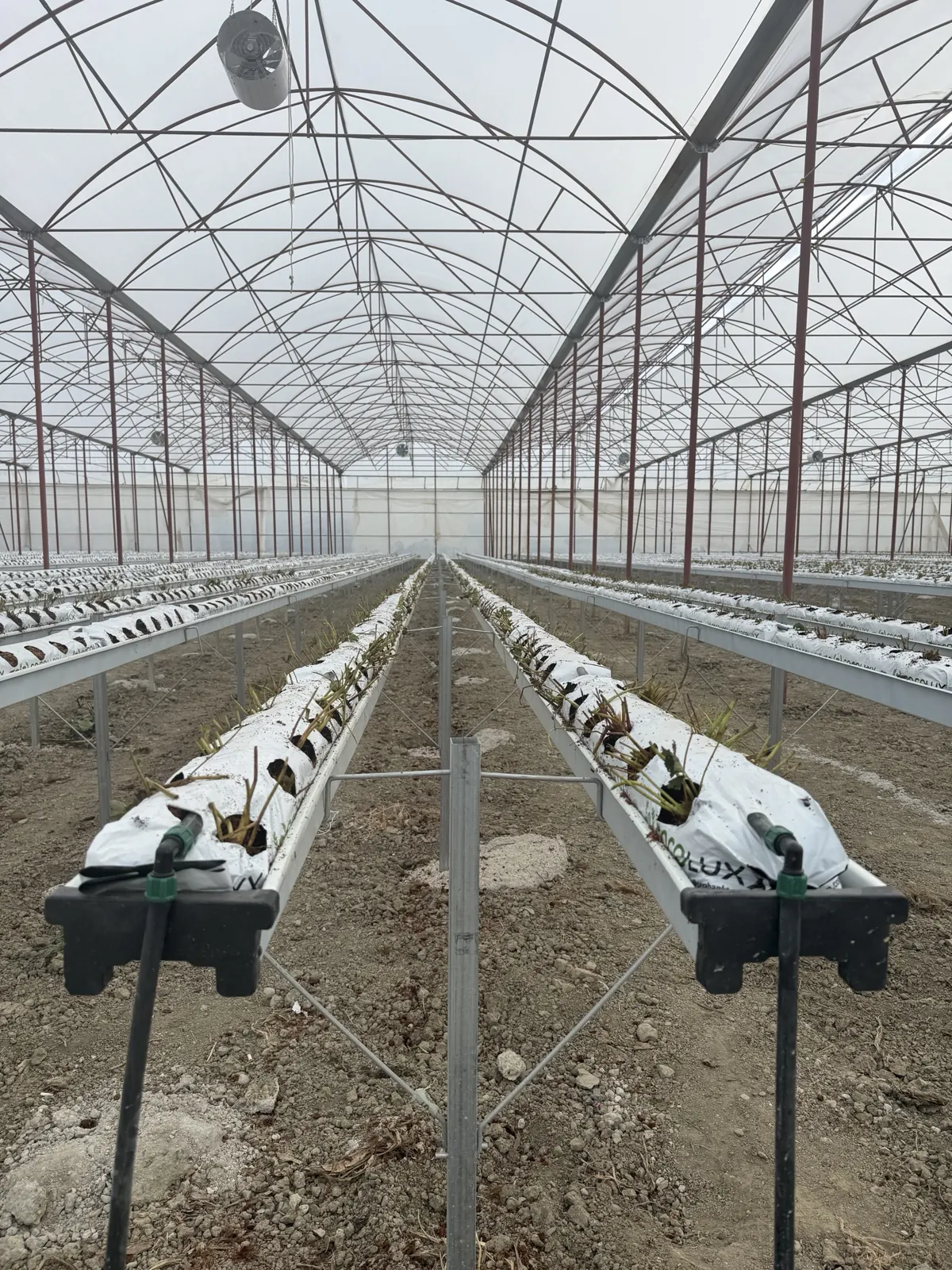
In commercial soilless strawberry production, plants usually grow in raised gutters or in substrate bags placed in those gutters. Gutters can be fixed, or movable as in Perge’s 10-decare project in Armenia. Gutter slope and drain outlets are part of the irrigation design: if drain water is to be measured, the collection line has to be planned from the start.
Drip irrigation design
For strawberries, emitters are closely spaced, low-flow and pressure-compensated so that every plant along a long gutter gets the same water. In the 25-decare project in Manavgat, for example, Rivulis D5000 PCND dripline was used with 15 cm emitter spacing and 1.5 L/h flow. PCND (pressure-compensating, non-drain) emitters keep the line full after irrigation stops, which helps water reach all plants at the same time during short, frequent pulses. The design inputs to define are gutter length and number, plant spacing, target pulse volume, the area irrigated in one shift and, from these, pump flow, filter capacity and pipe diameters.
Irrigation frequency and strategy
Because substrate volume is small, strawberries are irrigated little and often. The Ohio State University CEBPI fertigation guide reports, based on trials in Arizona and Ohio, pulses of about 33 mL per plant applied 6–12 times a day (roughly 200–400 mL per plant per day). These figures belong to that climate and season; in a Mediterranean climate like Antalya, the light difference between summer and winter changes daily irrigation number and volume considerably. The same source treats drainage in the first irrigations of the day as a sign that the root zone is too wet.
Fertigation management and drainage control
The Ohio State guide targets a nutrient solution pH of about 5.5–6.0 for soilless strawberries, recommends daily measurement of EC, pH and volume of both dripper and drain water, and gives a target drainage fraction of 20–30%. Strawberries are salt-sensitive, so drain EC rising well above feed EC is an early warning of salt build-up in the root zone. Feed EC depends on the EC of the irrigation water, the variety and the season; no single number fits every greenhouse.
Irrigation automation with radiation sensors
In soilless strawberries it is better to start irrigation from the water the plant actually uses than from the clock. The common method is to measure solar radiation and start irrigation when accumulated radiation reaches a set threshold; the threshold is adjusted to crop, season and substrate. Substrate moisture/EC sensors and drain measurement support this decision. A trial at Proefcentrum Hoogstraten in Belgium reported 38% less drain water with sensor-controlled irrigation and no yield loss.
How is a potted blueberry irrigation system set up?
Soilless blueberries in containers
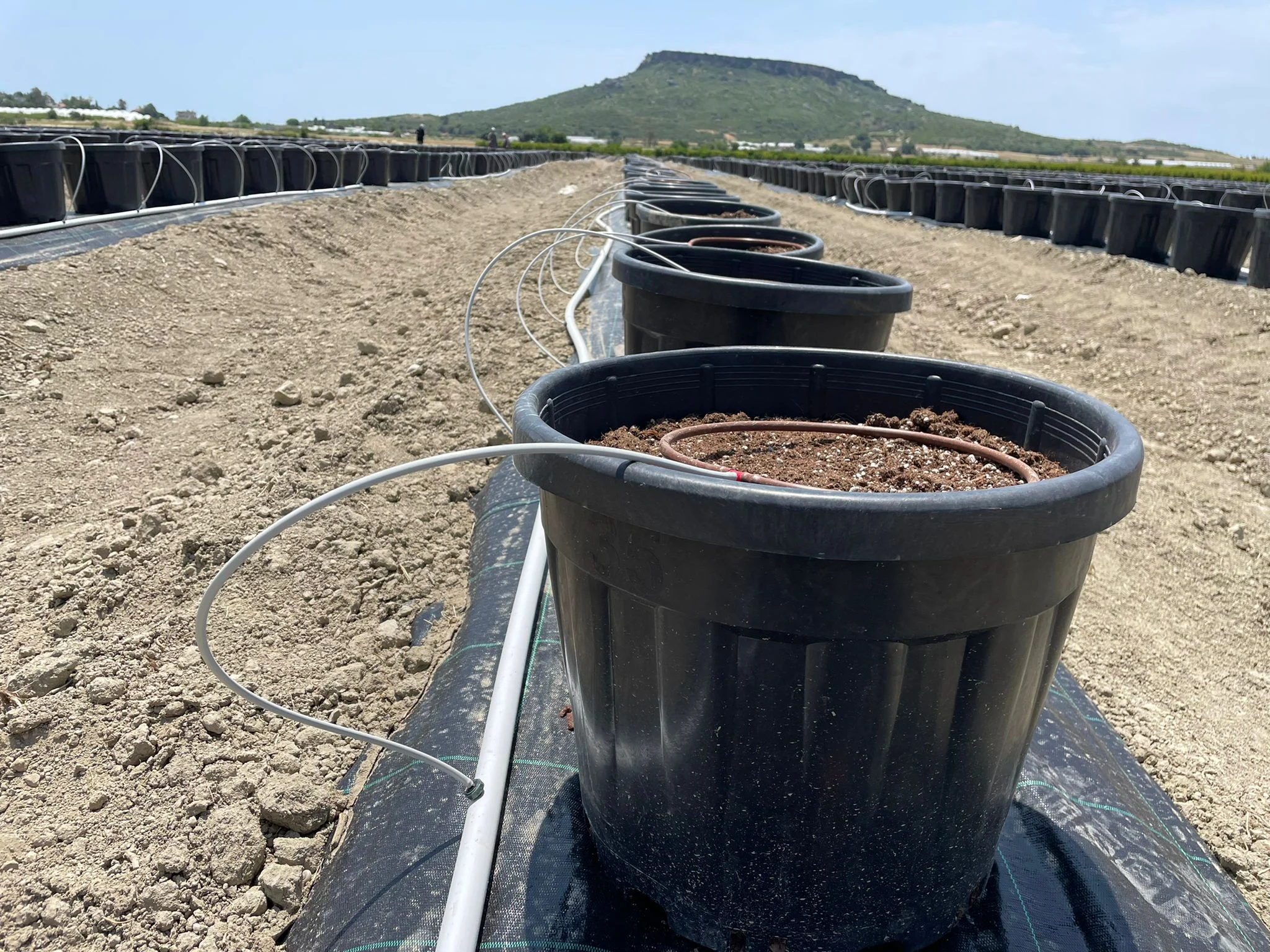
Blueberry is a perennial and in soilless production it is grown in containers. The University of Florida publication UF/IFAS HS1476 notes that current commercial plantings use 5–7 gallon (about 19–26 L) containers and that research has not shown larger containers to improve growth or yield. Container volume directly sets the water per irrigation and the number of irrigations per day.
Emitter selection per plant
UF/IFAS describes one emitter per container with two to four stakes to spread water over the container surface. The aim is to stop water from channelling through one spot to the drain and to wet the whole root volume. Pressure-compensated emitters reduce differences between containers in large blocks. Emitter flow and number of stakes are chosen from container diameter, substrate water-holding capacity and target pulse volume.
Moisture and oxygen balance in the root zone
Blueberry roots are fine and shallow; they lack oxygen in constantly wet substrate and stress quickly when it dries. UF/IFAS recommends short and frequent irrigation. The Netafim blueberry protocol advises not to make irrigations too short (longer than 5 minutes) to avoid salt accumulation in the substrate. The two are read together: a pulse should be long enough to wet the whole root volume, but not so long that it saturates the substrate.
EC and pH management for blueberries
Blueberries need an acidic root zone. UF/IFAS recommends keeping leachate pH at 4.5–5.5 and leachate EC below 2.0 dS/m, lower for young plants. The Netafim protocol gives feed EC of 1.2–1.6 depending on growth stage, pH generally 4.5–5.2, and advises against irrigation water with EC above 2 dS/m. If bicarbonate (alkalinity) in the irrigation water is not neutralised with acid, the target pH is hard to reach; that is why water analysis and acid dosing are the first step in blueberry projects.
Drainage measurement
UF/IFAS recommends a 15–25% leaching fraction for blueberries and advises against more than 25%. A NSW DPI / Acta Horticulturae study from Australia recommends avoiding drainage volumes above 40% and, in winter when uptake is low, supplying a more dilute solution at the same drainage. In practice, collection trays are placed under a few representative containers, drain volume, EC and pH are logged daily, and the irrigation programme is corrected from this data.
Automation in commercial plantations
In blueberry greenhouses of dozens of decares, the number of valves, shifts and recipe variables grows quickly. In Perge’s 66-decare soilless blueberry project in Serik, irrigation is fully automatic and driven by a radiation sensor. Automation starts irrigation from light, runs each shift in sequence and prepares the nutrient solution to its EC/pH target.
Differences between strawberry and blueberry irrigation systems
The values below are starting ranges taken from published guides. Every project must be adjusted to its water analysis, variety, climate and substrate.
| Criterion | Soilless strawberry | Potted blueberry |
|---|---|---|
| Growing layout | Raised gutter or bag; fixed or movable | Container; perennial planting |
| Emitter layout | Closely spaced dripline along the gutter (e.g. 15 cm, 1.5 L/h in the Manavgat project) | One emitter per container + 2–4 stakes (UF/IFAS) |
| Irrigation rhythm | Short, frequent pulses; 6–12 per day in research (OSU) | Short and frequent; pulse must wet the whole root volume (UF/IFAS, Netafim) |
| Target pH | About 5.5–6.0 in nutrient solution (OSU) | 4.5–5.5 in leachate (UF/IFAS); 4.5–5.2 in solution (Netafim) |
| EC approach | Salt-sensitive; feed EC by water and season, drain EC monitored | Feed 1.2–1.6 (Netafim); leachate < 2.0 dS/m (UF/IFAS) |
| Drainage fraction | 20–30% (OSU) | 15–25% (UF/IFAS); above 40% not advised (NSW DPI) |
| Critical risk | Salt build-up, over-wet root zone | High pH and alkaline water, lack of oxygen in the root zone |
How do fertigation and automation work together?
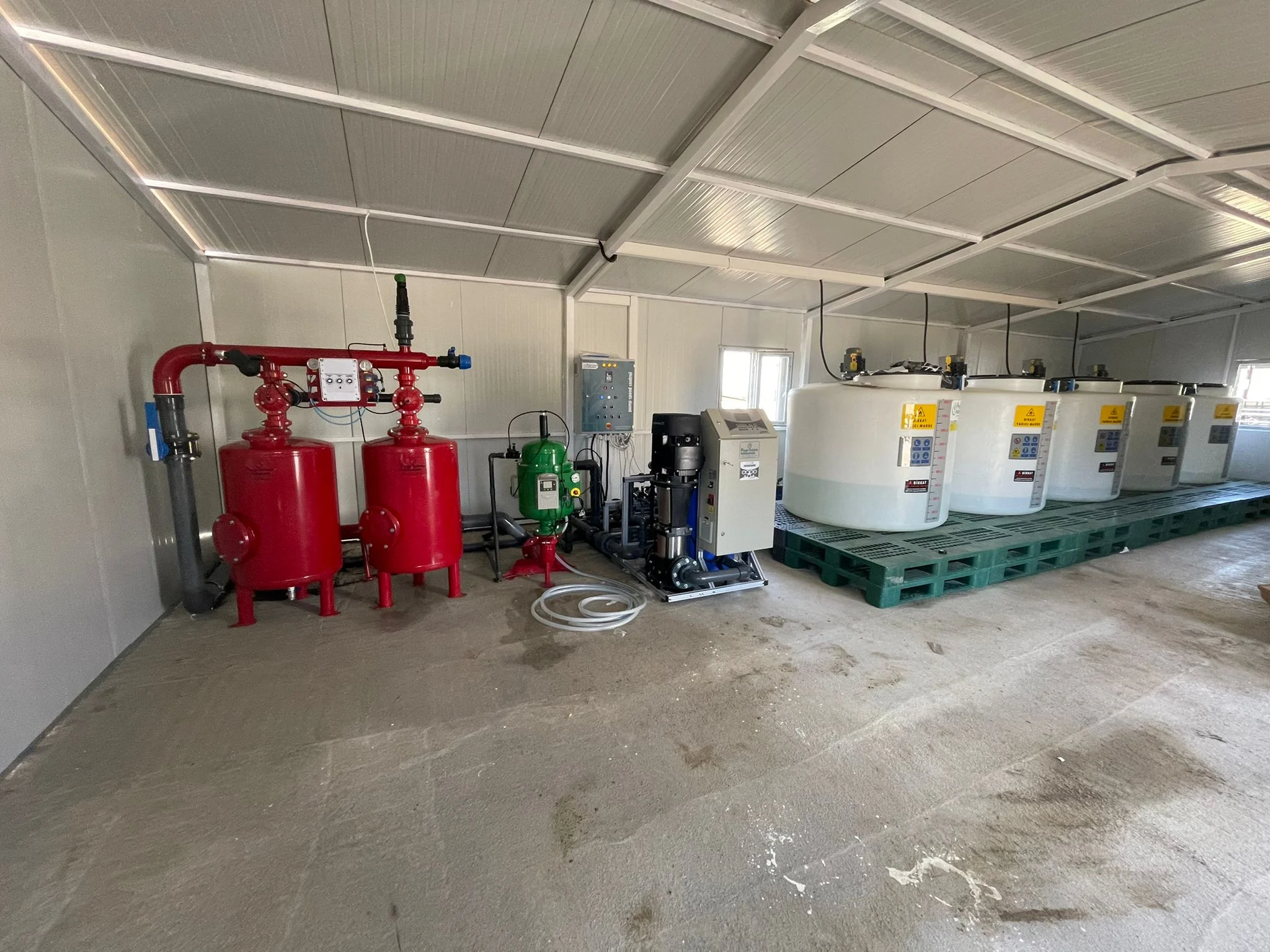
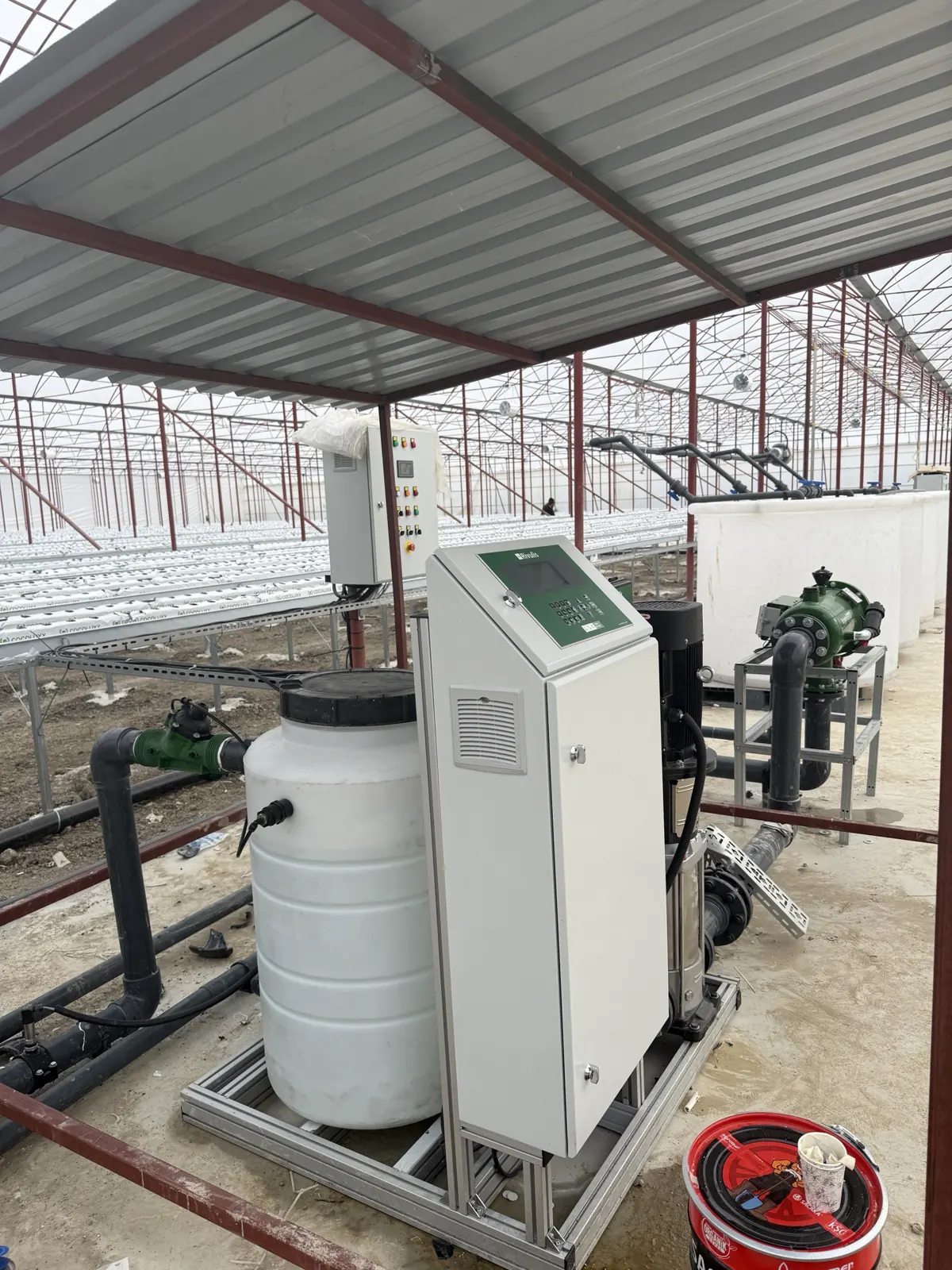
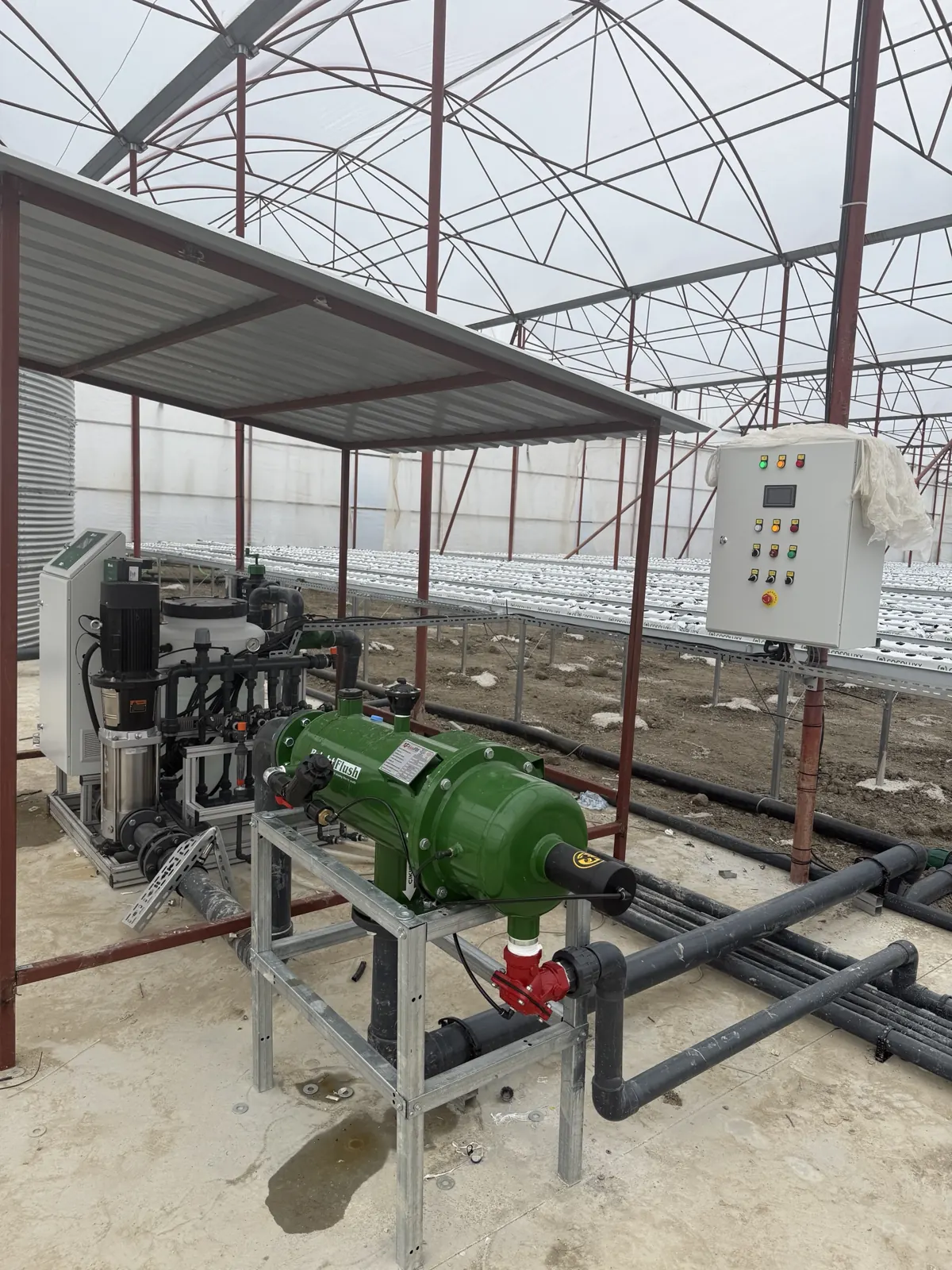
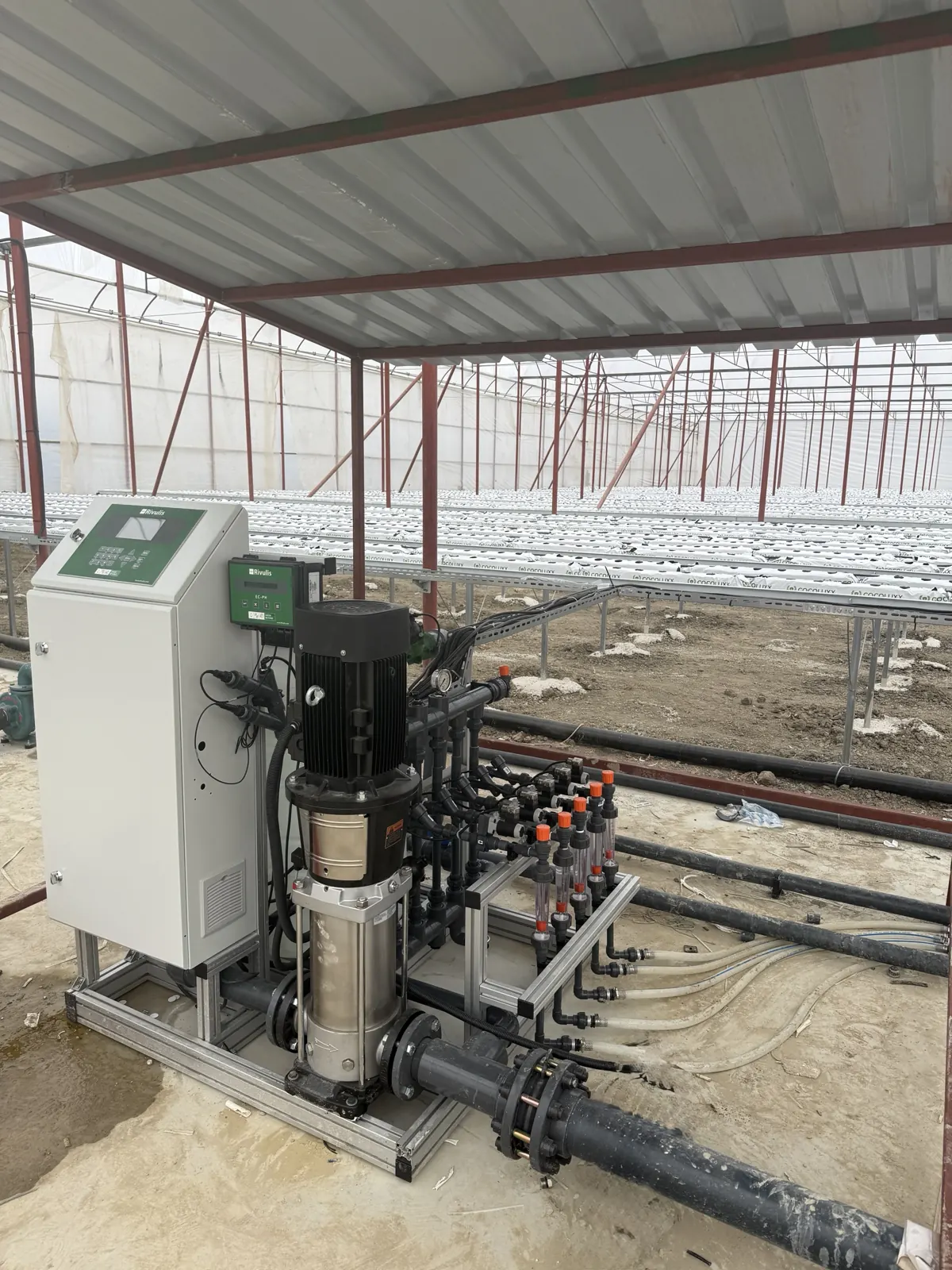
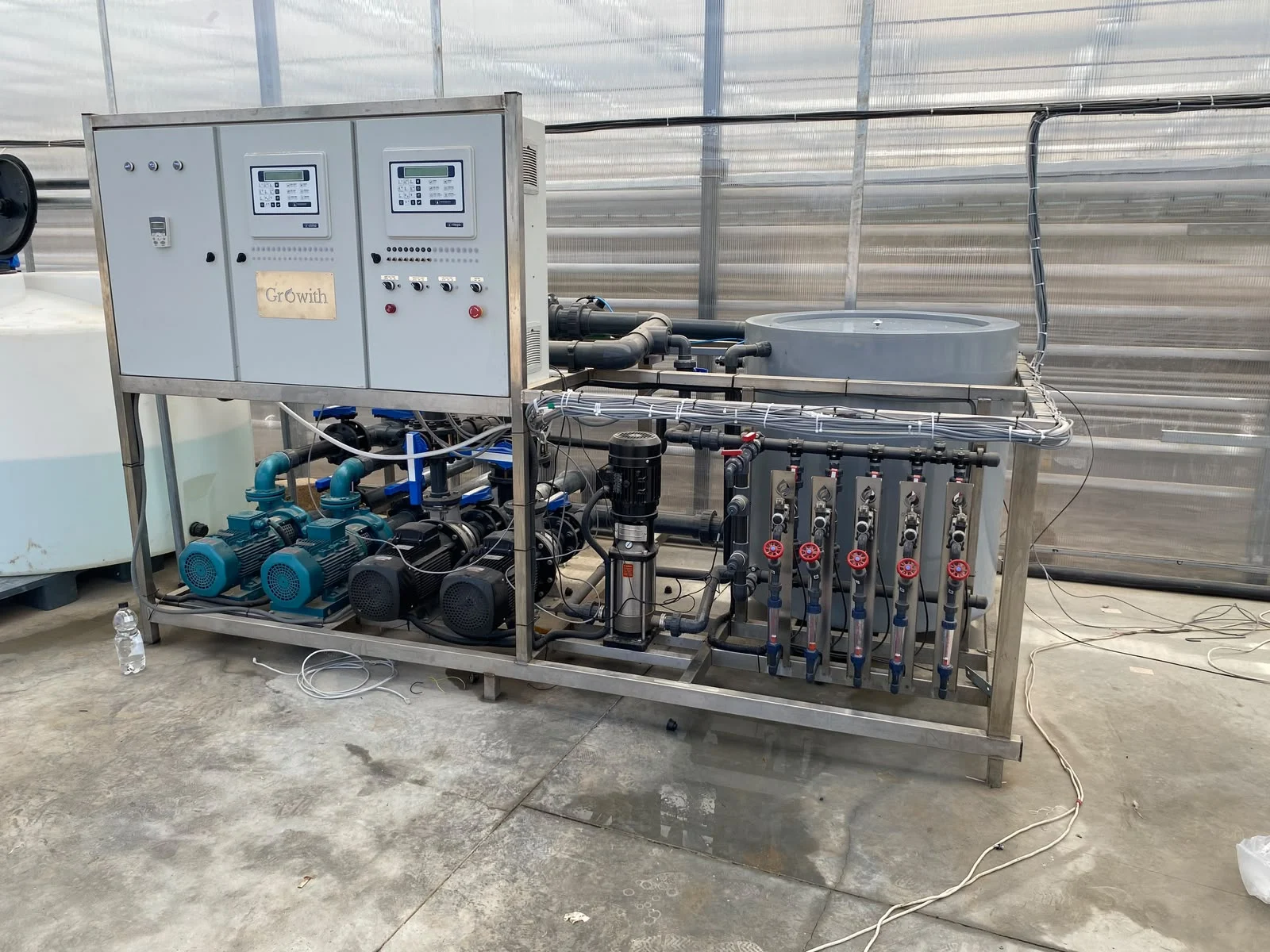
A soilless fertigation system prepares irrigation water and fertilizer in a single chain. In a typical strawberry or blueberry irrigation room the chain is:
- Water tank and pump: raw water is stored in a tank (e.g. a steel water tank); the pump supplies the flow and pressure of the largest shift.
- Filtration: an automatic backflushing filter group prevents emitter clogging. Filter type and capacity are chosen from the water source and total flow.
- Stock tanks: fertilizers that can precipitate together (e.g. calcium and sulphate/phosphate sources) are prepared in separate tanks, plus an acid tank.
- Dosing unit and mix tank: dosing pumps or venturis inject stock solutions into the water. In mix-tank systems the solution is first homogenised in a tank and then sent to the field.
- EC/pH sensors: EC and pH of the mix are measured continuously and the controller corrects dosing to target.
- Flow measurement and valves: a flow meter confirms each shift receives its target water; electric valves open in sequence.
- Sensors and control software: radiation sensor, drain measurement and, where needed, climate data feed the irrigation decision.
Perge Engineering project experience
The projects below are published on Perge Engineering’s reference pages. The information is limited to what those pages state.
Manavgat, Turkey: 25-decare soilless strawberry
- Location: Manavgat, Antalya
- Area / crop: 25 decares (2.5 ha), soilless strawberry
- Irrigation technology: Rivulis D5000 PCND dripline, 15 cm spacing, 1.5 L/h
- Automation and fertigation: fully automatic EC/pH control, mix-tank fertigation, steel water tank
- Reference: Soilless strawberry, Manavgat
Armenia: 10-decare soilless strawberry with movable gutters
- Location: Armenia
- Area / crop: 10 decares (1 ha), soilless strawberry
- System: movable gutters, EC/pH-controlled fertigation, climate control and complete electrical installation
- Scope: turnkey
- Reference: Soilless strawberry, Armenia
Serik, Turkey: 66-decare soilless blueberry
- Location: Serik, Antalya
- Area / crop: 66 decares (6.6 ha), soilless blueberry
- Automation: fully automatic irrigation driven by a radiation sensor
- Reference: Soilless blueberry, Serik
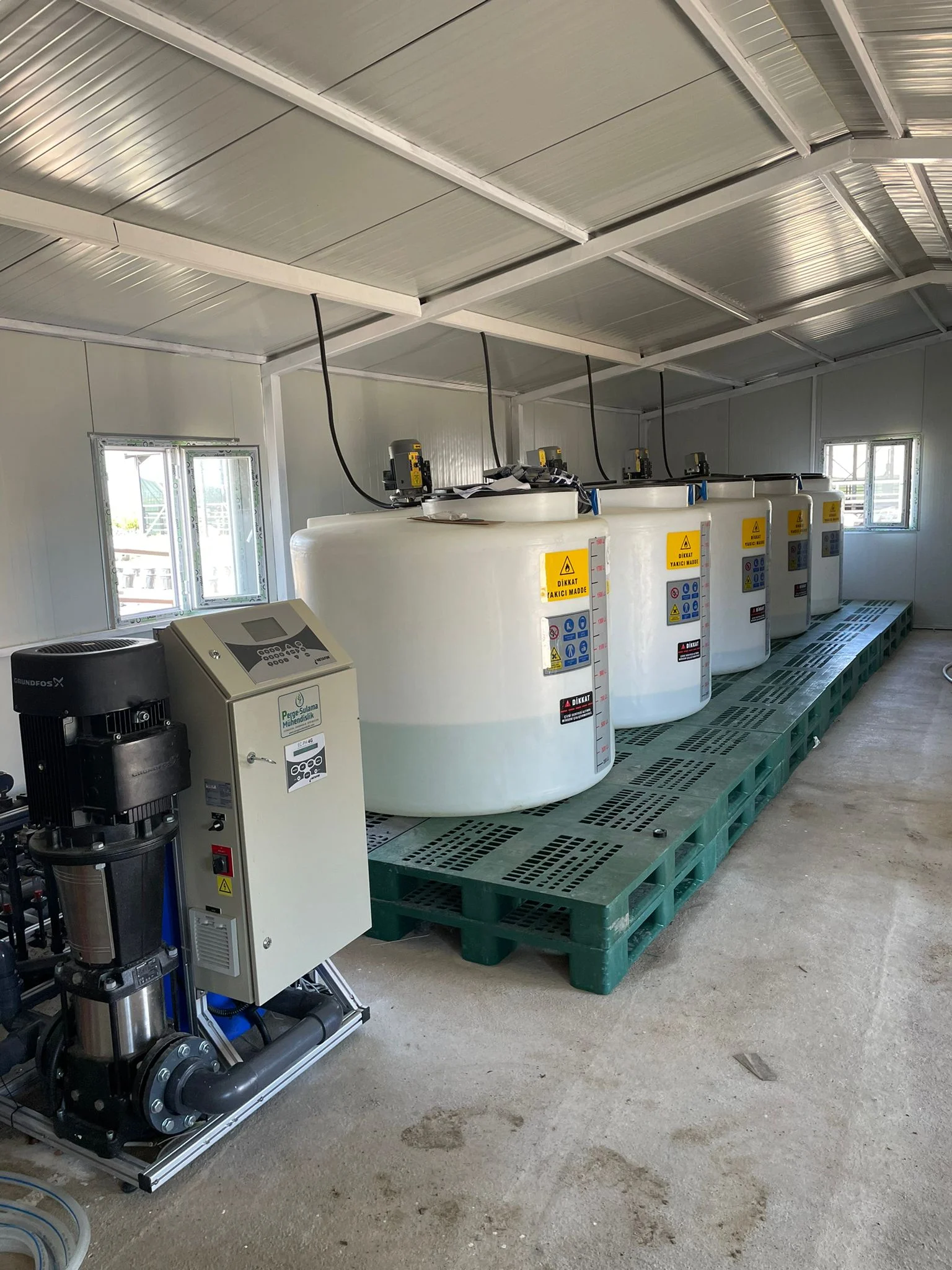
Manavgat, Turkey: 55-decare blueberry
- Location: Manavgat, Antalya
- Area / crop: 55 decares (5.5 ha), blueberry
- Automation: fully automatic EC/pH and climate control
- Reference: Blueberry, Manavgat
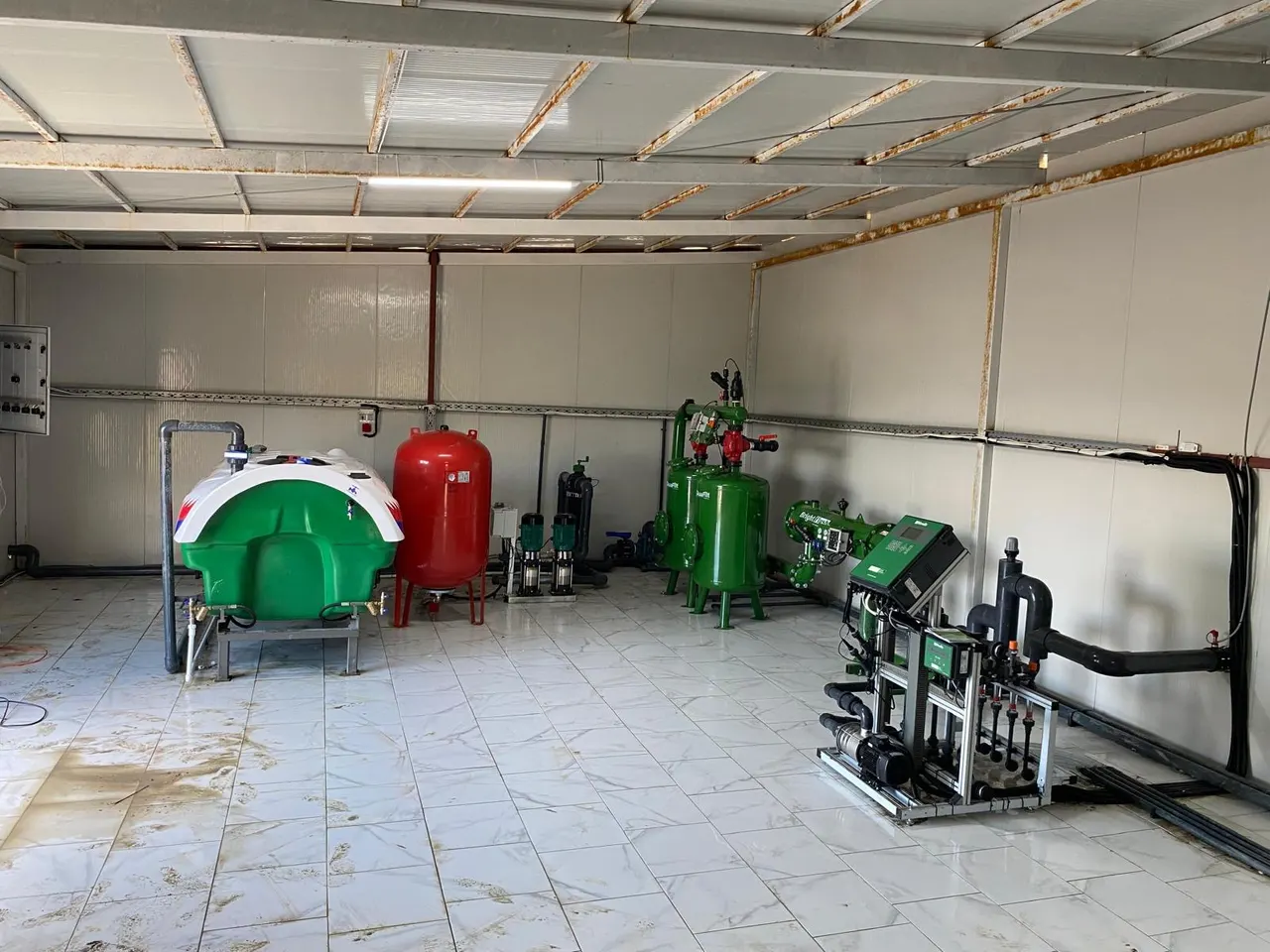
Other strawberry and blueberry references
| Project | Location | Area | System |
|---|---|---|---|
| Soilless strawberry | Serik, Antalya | 25 da | Fully automatic EC/pH control |
| Strawberry greenhouse | Serik, Antalya | 40 da | Fully automatic EC/pH control |
| Soilless strawberry | Serik, Antalya | 10 da | Fully automatic EC/pH control |
| Soilless strawberry (İlk Patara Tarım) | Elmalı, Antalya | 5 da | EC/pH-controlled irrigation and fertigation |
| Soilless strawberry (Bay Reklam) | Manavgat, Antalya | Not stated | Fully automatic irrigation and fertigation |
| Soilless strawberry (Siber Tarım) | Not stated | Not stated | Irrigation and fertigation automation |
| Blueberry | Eskişehir | Not stated | Fully automatic irrigation and fertigation |
How should investors choose an irrigation engineering company?
Choosing a greenhouse irrigation contractor on material price alone can become expensive during operation. Questions an investor should ask:
- Are the design inputs in writing? Water analysis, source flow, area dimensions, plant spacing and target number of shifts should be asked before the quote; pipe sizes, pump and filter must be calculated from these inputs.
- Is there a hydraulic calculation? Flow, pressure losses and the reasoning behind pump selection should come with the quote.
- Are the fertigation recipe and EC/pH strategy crop-specific? Strawberries and blueberries cannot run on the same settings.
- Are there visitable references of similar scale? Published projects and, where possible, a site visit are the strongest evidence.
- Is the scope clear? The quote should state which of design, supply, installation, electrical work, commissioning and training are included.
- What support comes after commissioning? Sensor calibration, spare parts and service response time should be in the contract.
- Does the company have field experience abroad? Logistics, local electrical standards and the supervision plan should be agreed at the start.
Frequently asked questions
What are the components of a soilless strawberry irrigation system?
Water tank, pump, filter group, fertilizer stock tanks, EC/pH-controlled dosing unit, main and distribution pipes, electric valves, driplines along the gutters and a controller. A radiation sensor and drain measurement complete the automation.
What pH should be targeted for blueberries?
The University of Florida (UF/IFAS) recommends keeping leachate pH between 4.5 and 5.5 for container blueberries. The Netafim protocol gives 4.5–5.2 for the nutrient solution. The exact value depends on variety, water and substrate.
How many times a day are soilless strawberries irrigated?
There is no fixed number; it changes with light, temperature and plant development. In the trials cited by Ohio State, about 33 mL per plant was applied 6–12 times a day. In commercial greenhouses, the number of irrigations is usually set by a radiation sensor and drain measurement.
How many emitters go in a blueberry container?
UF/IFAS describes one emitter per container with two to four stakes to distribute the water. Emitter flow is chosen from container volume and substrate.
What should the drainage fraction be?
Guides give 20–30% for soilless strawberries (Ohio State) and 15–25% for container blueberries (UF/IFAS). Drain volume, EC and pH are measured daily and the irrigation programme is corrected accordingly.
What is radiation-based irrigation?
A sensor measures solar radiation in the greenhouse and starts irrigation when accumulated radiation reaches a set threshold. Plants are irrigated more often on sunny days and less on cloudy days. The threshold is set by crop and season.
What is the advantage of a mix-tank fertigation system?
Fertilizer and acid are first mixed with water in a tank; EC and pH are measured and corrected before the solution is sent to the field. This helps keep the solution delivered to the lines more stable.
Does Perge Engineering work on projects outside Turkey?
Yes. Its reference pages include a turnkey 10-decare soilless strawberry greenhouse in Armenia with movable gutters, EC/pH-controlled fertigation and climate control.
What information is needed for an irrigation project?
Greenhouse or field dimensions and layout, crop and planting pattern, water source and flow, irrigation water analysis, electrical infrastructure and any existing equipment.
Conclusion: from design to commissioning
In a soilless strawberry or blueberry investment, irrigation is one of the hardest systems to change later. Perge Engineering runs the whole process with one team: from water and site data to hydraulic calculation, selection and supply of drip and fertigation equipment, installation, electrical and automation work, commissioning and operator training. The company carries out project engineering for soilless strawberry and blueberry greenhouses in Turkey and abroad.
Request a professional irrigation and fertigation project for your soilless strawberry or blueberry investment.
For preliminary sizing you can also use our drip irrigation calculator, pipe size calculator and filter selection tools.
Sources
- Nunez, Zapien, Phillips. Introduction to Southern Highbush Blueberry Cultivation in Containers (UF/IFAS, HS1476)
- Netafim. Irrigation and fertigation protocol for blueberries grown in soilless substrate
- Parks et al. Improving the management of soilless growing media for potted Southern highbush blueberry (NSW DPI, Acta Horticulturae 2023)
- Ohio State University CEBPI. Fertigation (soilless strawberry)
- Hortidaily. Proefcentrum Hoogstraten sensor-controlled strawberry irrigation trial
- Rivulis. Pressure-compensated drip lines